
Choosing carbide inserts based only on shape or price can quickly become expensive. Two inserts that look nearly identical may behave very differently when machining steel, stainless steel, cast iron, or other materials. For CNC and VMC users in Pune, matching insert grade and geometry to the machining application is one of the most practical ways to improve tool life and process stability.
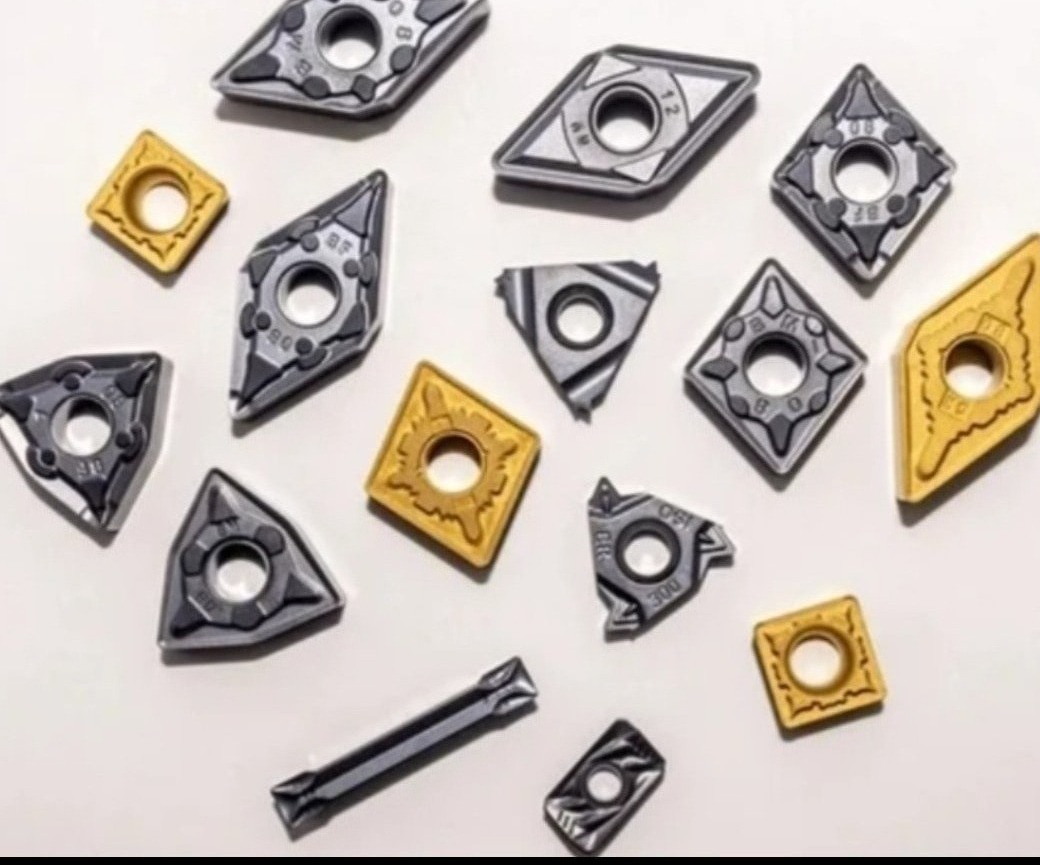
An indexable carbide insert forms the cutting edge of many turning, milling, boring, and related tools. Once one cutting edge reaches its usable limit, the insert can often be indexed to another edge or replaced without replacing the complete tool body.
The first selection factor is workpiece material. Cutting steel creates different thermal and mechanical conditions from machining cast iron or stainless steel. Insert manufacturers therefore offer different carbide substrates, coatings, and grades for different material groups and cutting conditions.
Geometry matters just as much. A roughing operation may need a strong cutting edge capable of handling higher loads, while finishing may require a geometry that supports lower cutting forces and better surface quality.
When insert performance is disappointing, buyers should review the entire cutting process rather than immediately changing brands. Common causes of poor tool life include:
Incorrect cutting speed
Excessive or insufficient feed
Unsuitable depth of cut
Poor chip control
Inadequate coolant application
Workholding instability
Tool overhang
Machine vibration
Incorrect insert grade or geometry
Wear patterns provide useful clues. Gradual flank wear may indicate normal tool consumption, whereas chipping, notching, thermal cracking, built-up edge, or sudden fracture can point toward specific process problems.
Insert compatibility with the cutter or tool holder must also be confirmed. Insert shape alone is not enough. Size, thickness, corner radius, chipbreaker, clearance configuration, grade, and clamping arrangement should match the tool body and application.
For machining businesses across Pune, Pimpri-Chinchwad and other Maharashtra industrial clusters, tool cost is best evaluated as cost per acceptable component rather than purchase price per insert. A cheaper insert that requires frequent changes, causes inconsistent finishes, or contributes to component rejection can result in a higher overall machining cost.
Perfect Tools Centre supplies industrial tooling to customers working with CNC, VMC, and conventional machining applications in Pune. Providing details such as workpiece material, operation, current insert designation, tool holder, cutting parameters, and the problem being experienced can help narrow down appropriate options.
Trial results should also be documented. Instead of judging a new insert from a single component, record tool life, number of parts produced, cycle time, surface finish, wear pattern, and any parameter changes. This creates a more objective comparison.
Successful carbide insert selection is therefore a combination of material compatibility, geometry, grade, cutting conditions, machine stability, and economic performance. Looking at the complete machining process helps manufacturers make better tooling decisions and avoid repeatedly replacing inserts without addressing the underlying cause of poor performance.