
A broken tap, torn thread, or tight plug gauge usually starts with a wrong hole, poor alignment, unsuitable fluid, or a tap selected for the wrong thread and material. By the end, you will be able to diagnose the failure, choose the drill and hand-tap sequence, improve the tapping process, and specify what to verify when comparing Pune suppliers.
Key takeaways
- Check hole size, alignment, cutting conditions, tap wear, and material before replacement.
- Match the tap drill to the thread designation and use taps in sequence.
- Use suitable cutting fluid and reverse the tap regularly to clear chips.
- Choose spiral-flute or machine taps when straight-flute hand taps pack chips.
Diagnose the failure before replacing the tap
Before replacing an HSS hand tap, isolate the source by checking the hole, alignment, cutting conditions, tap condition, and workpiece material in that order. A broken tap is often the final symptom, not the original fault.
1. Measure the pilot hole against the specified tapping-drill diameter and inspect its chamfer and depth. An undersized hole raises torque; inadequate chamfer leaves the first thread overloaded. A blind hole also needs clearance below the required thread depth.
2. Check alignment with a square or the machine spindle. If the tap enters at an angle, expect chipped edges, spiral marks, uneven flanks, or breakage at the mouth. Do not correct misalignment by applying more hand force.
3. Review the cutting action. Excessive speed, dry cutting, failure to reverse periodically, or forcing a bottoming tap too early causes chip packing and seizure. Stop if torque rises suddenly, then clear the chips instead of twisting harder.
4. Inspect the tap under magnification. Dull, chipped, galled, bent, or clogged flutes explain rough or incomplete threads even when the hole is correct. Test a known-good tap in the same hole to separate tool failure from process failure.
5. Identify the workpiece before blaming the tool. Stainless steel can work-harden when the tap rubs; aluminium can gall; cast iron creates abrasive chips; plastics can tear or deform. Match lubrication and chip control to the material, since manual internal threading tools do not behave identically in every alloy.
These checks expose HSS hand tap problems before a replacement repeats them.
Match the drill diameter, thread designation, and tap sequence
Select the drill from the thread’s pitch, form, and standard—not from nominal diameter alone. For example, M6 × 1.0 normally starts with a 5.0 mm drill, while M10 × 1.5 normally starts with 8.5 mm; confirm the tap maker’s table for material, thread percentage, and hole depth.
| Thread designation | Correct match | Typical starting drill |
|---|---|---|
| M8 × 1.25 | ISO metric, 8 mm major diameter, 1.25 mm pitch | 6.8 mm |
| 1/4-20 UNC | Unified coarse, 20 threads per inch | No. 7, about 0.2014 in |
| 1/4-28 UNF | Unified fine, 28 threads per inch | No. 3, about 0.2130 in |
1. Identify the complete designation: M8 × 1.25, 1/4-20 UNC, or 1/4-28 UNF. A correct diameter with the wrong pitch can start cleanly and still produce a useless thread.
2. Choose the hole type. Drill deeper than the required thread for a blind hole, leaving space for chips and the tap’s chamfer. A through-hole gives chips an exit path.
3. Use a taper tap to start straight. Follow with a plug tap when more full-depth thread is needed; use a bottoming tap only after the preceding tap has established the thread. For a short blind hole, do not force the bottoming tap into unthreaded material.
4. Specify these details when buying manual internal threading tools: standard, size, pitch, drill diameter, through or blind hole, thread depth, material, and HSS or HSS-E grade. Missing details invite HSS hand-tap problems such as excess torque, chip packing, or breakage.
Use the right tapping method and fluid for the material
Start the tap square to the hole, keep the cut moving, and clear chips before they pack. High hand force signals an HSS hand tap problem, not a normal part of manual internal threading.
1. Clamp the work securely and use a tapping guide or drill-press quill for alignment. Chamfer the hole so the first threads enter cleanly; a tilted tap creates rough flanks, incomplete threads, and breakage.
2. Apply a material-appropriate tapping fluid before starting. Use sulfurized or extreme-pressure tapping oil for mild steel. For stainless steel, use a strong sulfurized tapping fluid and keep the tap cutting continuously; dwelling rubs and work-hardens the hole.
Use aluminum tapping fluid for aluminium, brass-safe light tapping oil for brass, and a light oil only when it does not promote chip adhesion. Cast iron is commonly tapped dry because abrasive chips mixed with oil form a grinding paste.
Tap plastics dry unless the polymer maker specifies lubricant; heat and chemical attack can distort the thread.
3. Turn a straight-flute tap about half a turn forward, then reverse a quarter turn to fracture the chip. Repeat without forcing. In stainless steel, aluminium, and ductile mild steel, this prevents chip packing, galling, and seizure.
4. Withdraw the tap periodically from a blind hole and brush out chips; never drive a bottoming tap into unthreaded depth. Forcing it causes chipped edges or sudden fracture.
5. Clean the hole, inspect the flanks, and test with the matching gauge or bolt. Manual internal threading tools do not compensate for an undersized hole, damaged tap, or wrong lubricant.
Know when a straight-flute hand tap is the wrong tool
Choose a different tap when the hole, material, or chip path makes manual reversal the cause of failure—not merely because the tap is HSS. A straight-flute hand tap is a poor choice for production tapping, deep blind holes, long stringy chips, or stainless steel that work-hardens when the tool dwells.
| Option | Chip movement and tool behaviour | Choose it when |
|---|---|---|
| Straight-flute HSS hand tap | Chips remain in the flutes; manual reversal breaks them | Short, accessible holes and controlled hand tapping |
| Spiral-point machine tap | Chips move forward out of the cutting zone | Through-holes in steel, brass, and aluminium |
| Spiral-flute machine tap | Chips travel back toward the hole mouth | Blind holes requiring clean chip evacuation |
| HSS-E or cobalt-alloyed tap | Higher hot-hardness and wear resistance | Abrasive alloys, stainless steel, or longer production runs |
| Thread mill or staged evacuation | Chips are removed by the cutter path or cleaning step | Deep, large, interrupted, or chip-packed holes |
HSS-E does not rescue poor alignment, an undersized drill, weak lubrication, or a seized tap. In austenitic stainless steel, use rigid alignment, positive feed, sulfurized or suitable extreme-pressure fluid, and no dwell; rubbing hardens the hole and worsens recurring HSS hand tap problems.
When requesting quotes from Ruhi dealers in Pune or searching “hss hand taps suppliers in pune,” state the thread standard, nominal size, pitch, hand-tap sequence, through or blind hole, material, thread depth, and HSS or HSS-E grade. Confirm flute geometry, tolerance class, manufacturer marking, and batch traceability.
How to evaluate Ruhi dealers and HSS hand-tap suppliers in Pune
A quotation is only as accurate as the thread brief you send. “M10 tap” does not identify the pitch, thread form, tolerance class, hole depth, or tap sequence, so a correctly sized tool can still produce a useless thread.
- State the thread standard and designation: ISO metric M10 × 1.5, 1/4-20 UNC, 1/4-28 UNF, or a named pipe thread. Include nominal size, pitch, and internal-thread tolerance such as 6H.
- Specify the tap sequence: taper, intermediate, and plug; request a plug tap first when the job uses a blind hole and needs full thread near the bottom.
- Identify the hole as through or blind, then give drilled diameter, usable thread depth, and the required full-thread depth. For M10 × 1.5, 8.5 mm is the starting drill estimate, but confirm the maker’s table for material and thread percentage.
- Name the workpiece material and condition: mild steel, stainless steel, aluminium, cast iron, plastic, hardened stock, or abrasive alloy. State whether conventional HSS or HSS-E/cobalt-alloyed HSS is required.
- Ask for flute geometry, chamfer, tolerance class, product marking, batch or lot traceability, and the manufacturer’s current distributor status.
Use these details when comparing ruhi dealers hss hand taps for threading problems in pune, ruhi dealers in pune, and hss hand taps suppliers in pune. Ask Perfect Tools Centre to place every specification on the quotation, not merely “HSS hand tap.”
Related product
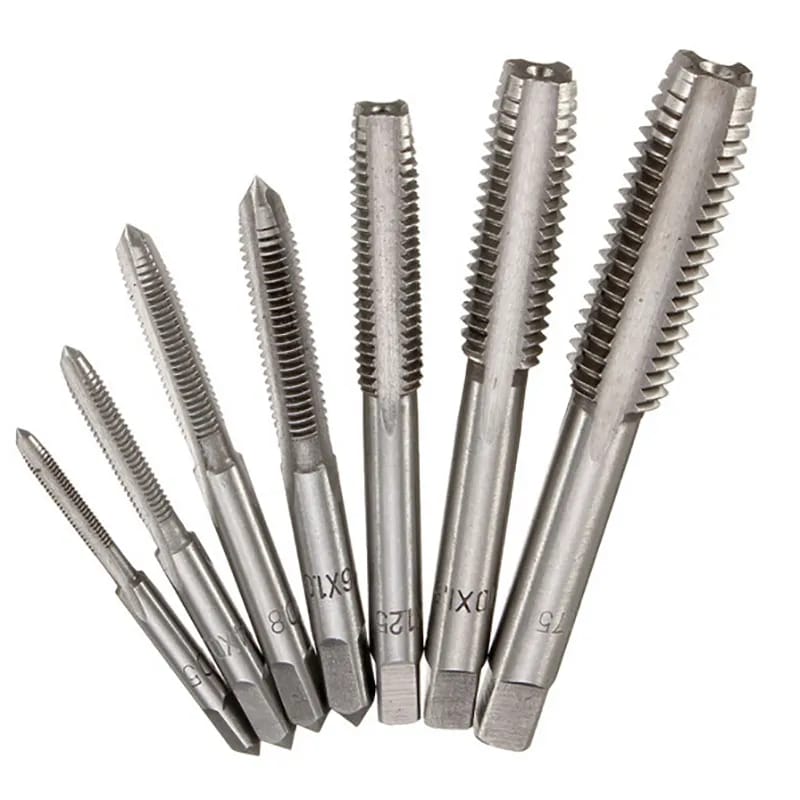 | HSS Hand Taps HSS hand taps are tools made of High-Speed Steel (HSS) used to manually cut internal threads in materials like metal and plastic. View product → |
Frequently asked questions
What should you check before replacing a broken HSS hand tap?
Check the hole diameter, alignment, tapping method, cutting conditions, tap condition, and workpiece material in that order.
How do you prevent incorrect tap-drill selection?
Match the drill diameter to the exact thread designation, pitch, material, and required percentage of thread before tapping.
Which tapping method and fluid should you use?
Align the tap squarely, use the correct hand-tap sequence, reverse regularly to break chips, and select fluid for the workpiece material.
When is a straight-flute hand tap the wrong tool?
Choose another tap style when blind holes, long continuous chips, difficult materials, or production tapping cause chip packing and excessive torque.
How should you evaluate Ruhi dealers and HSS hand-tap suppliers in Pune?
Ask for the exact thread standard, size, pitch, tap sequence, HSS grade, coating, stock condition, and technical guidance before buying.